
Benefits of Kansa Foot Massage: What Ayurveda Says, Face and Body Massage, and More
Padabhyanga is the Ayurvedic oil massage of the feet, done with a small bronze vati. Here is what the old texts say about it, what each vati feels like on the sole, and how kansa is used on the face and the body.
-

In this article (6)
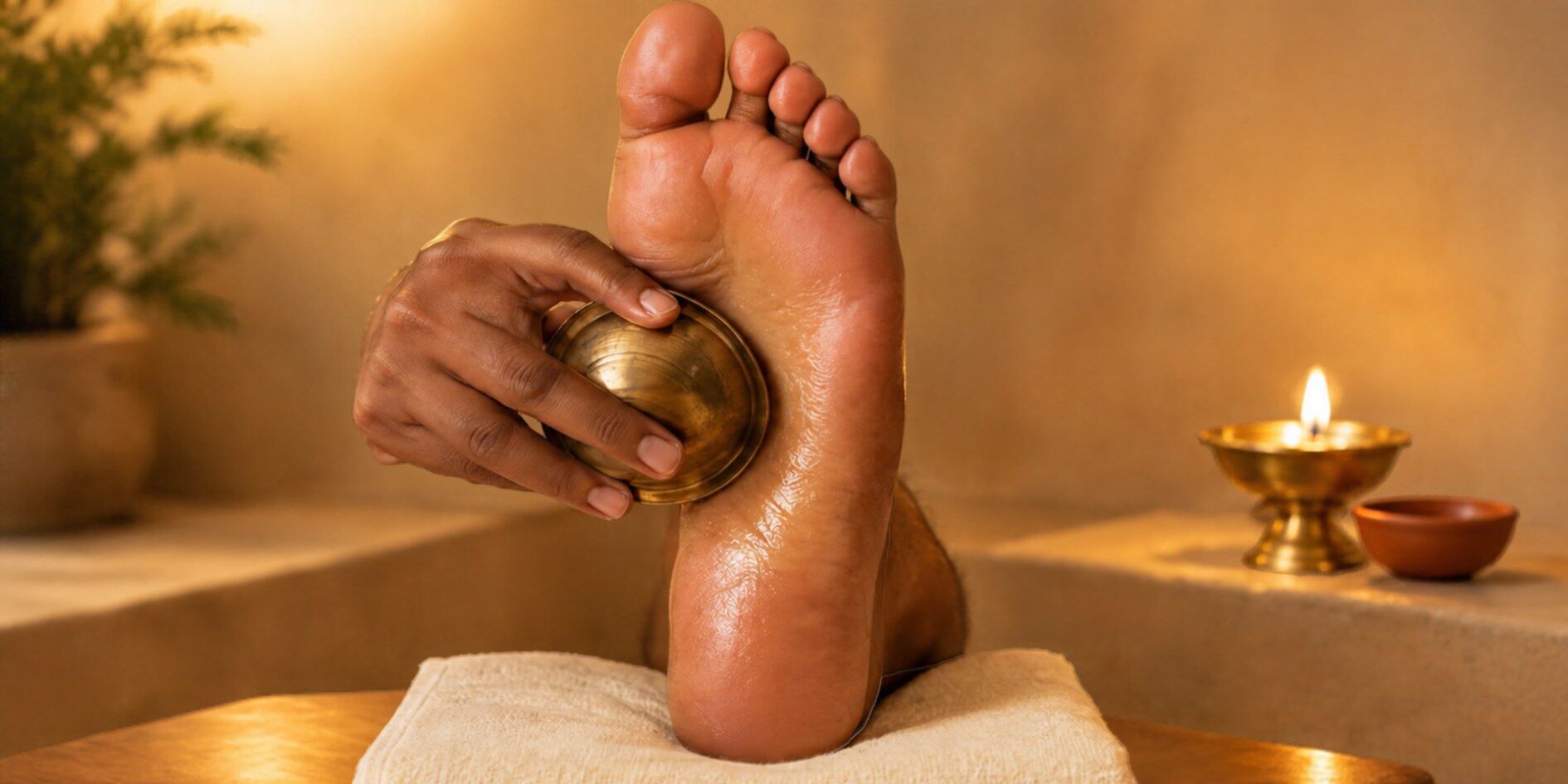
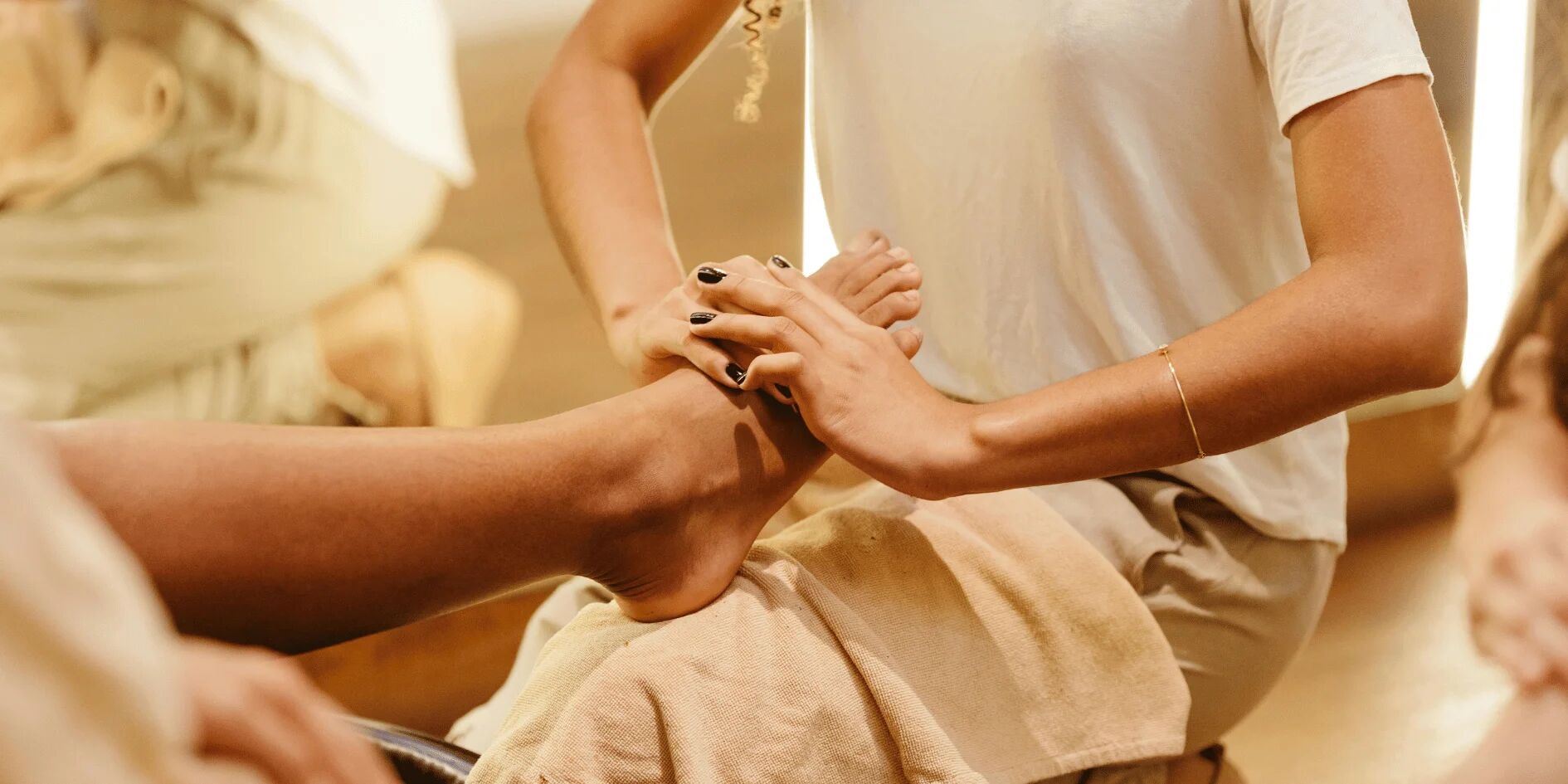
Kansa foot massage, also known as padabhyanga, is an Ayurvedic massage of the feet, done with a vati, which is a small bowl made of bronze. As per Ayurvedic tradition, it is done in the evening to help the body settle at the end of the day. The bronze is called kansya (कांस्य). It is made from copper and tin, and once a little oil goes on the sole, the vati glides over the skin, right from the heel to the toes, and slowly warms as it moves along.
Please note that padabhyanga is a tradition, not a medical treatment. This article provides a detailed overview of the Benefits of Kansa Foot Massage, including its traditional use in Ayurveda, the marma points that Ayurvedic texts describe on the sole, and what the bronze vati does on the skin. We will also explain the benefits of kansa massage on the face and the body, and which vati is used for each of them.
Benefits of Kansa Foot Massage
The name padabhyanga (पादाभ्यंग) is made of two Sanskrit words. The first, "Pada", means the foot, and the second, "Abhyanga", means an oil massage, so the name itself tells you what is done and to which part of the body. Below are the benefits of kansa foot massage. Some of them come from the Ayurvedic texts, and the rest come from the bronze vati and the way it moves over the sole.
A Daily Habit in Ayurveda
The Charaka Samhita, one of the main ancient texts of Ayurveda, describes oil massage, known as abhyanga, as an integral part of dinacharya, which is the routine that a person is asked to follow every day.1
When the Ashtanga Hridaya, another main text, explains this daily oil massage, it names the head and the ears as two places that need extra care, and the feet as the third.2 The Charaka Samhita also gives the oil massage of the feet its own passage, under the name padabhyanga.1
Traditionally Done in the Evening
The time of day matters here too. By the evening, the feet have carried a person through the whole day. In Ayurveda, that is when padabhyanga is traditionally done, after a bath, or just before going to bed, in order to help the body settle once the work of the day is over. Generally, it is kept as a small habit that is repeated every evening, in the same way as brushing the teeth before bed.
We describe a tradition here, and the ancient texts are named only so that you can see where it comes from. To learn more about how the massage fits into an evening at home today, please read our page on the benefits of Kansa massage.
Marma Points on the Sole
Marma points are the vital points of the body, as the ancient Ayurvedic texts describe them. The Sushruta Samhita, another ancient text, explains them in detail. As per the same text, there are 107 marma points across the whole body, and eleven of them lie on each leg.3
Some of them sit on the foot. For example, the text places one called talahridaya in the middle of the sole, in a straight line from the middle toe, and another called kshipra between the big toe and the second toe.3
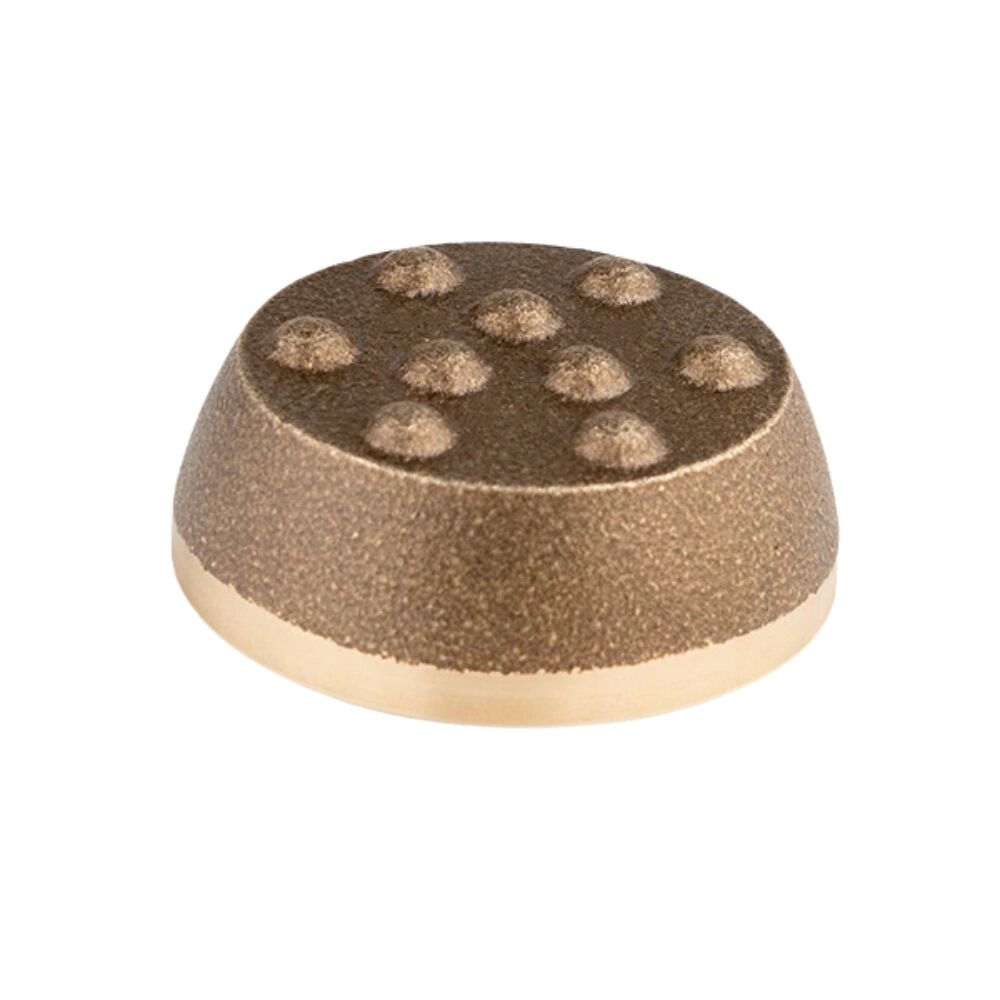
In the tradition, padabhyanga is the practice of working slowly over such points. Of our four vatis, the dotted vati is the one meant for this. It is listed as the "Acupressure Vatki" on the product page, and its raised dots press the weight of the bronze into small spots, so the pressure on the sole feels firmer than it does with the other vatis.
Please note that if the dots feel too firm for someone at home, the flat vati is the gentler one to start with.
The Warmth and Weight of the Bronze
Much of what a person feels during a kansa foot massage comes from the metal itself. The vati slowly warms as it keeps moving over the oiled sole, and the weight of the bronze can be felt through the whole movement. The oil matters as well, because on a dry sole the vati tends to drag. A spoonful of oil lets it slide evenly over the whole sole.
Three of the four vatis are made for the feet, and each one feels a little different on the sole:
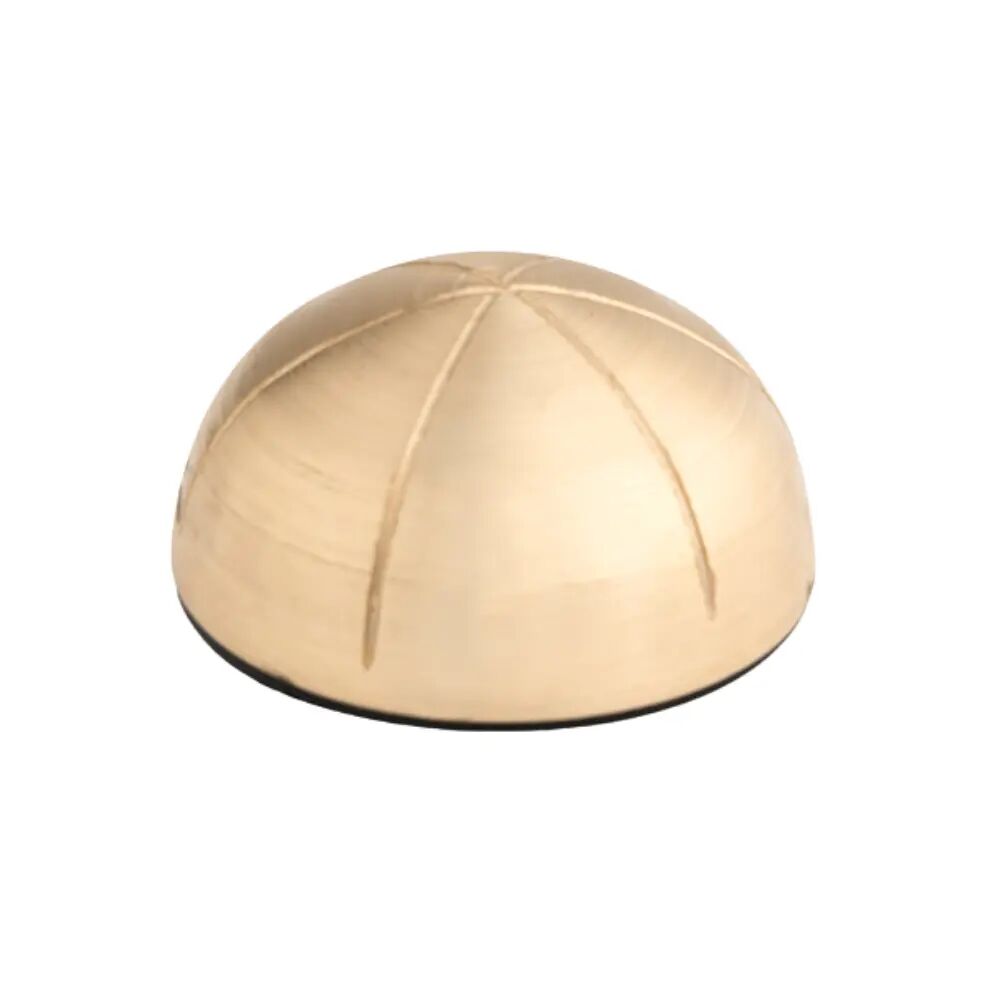
- Round Vati: Lines run across the surface of the round vati, and it is the one that padabhyanga is usually done with.
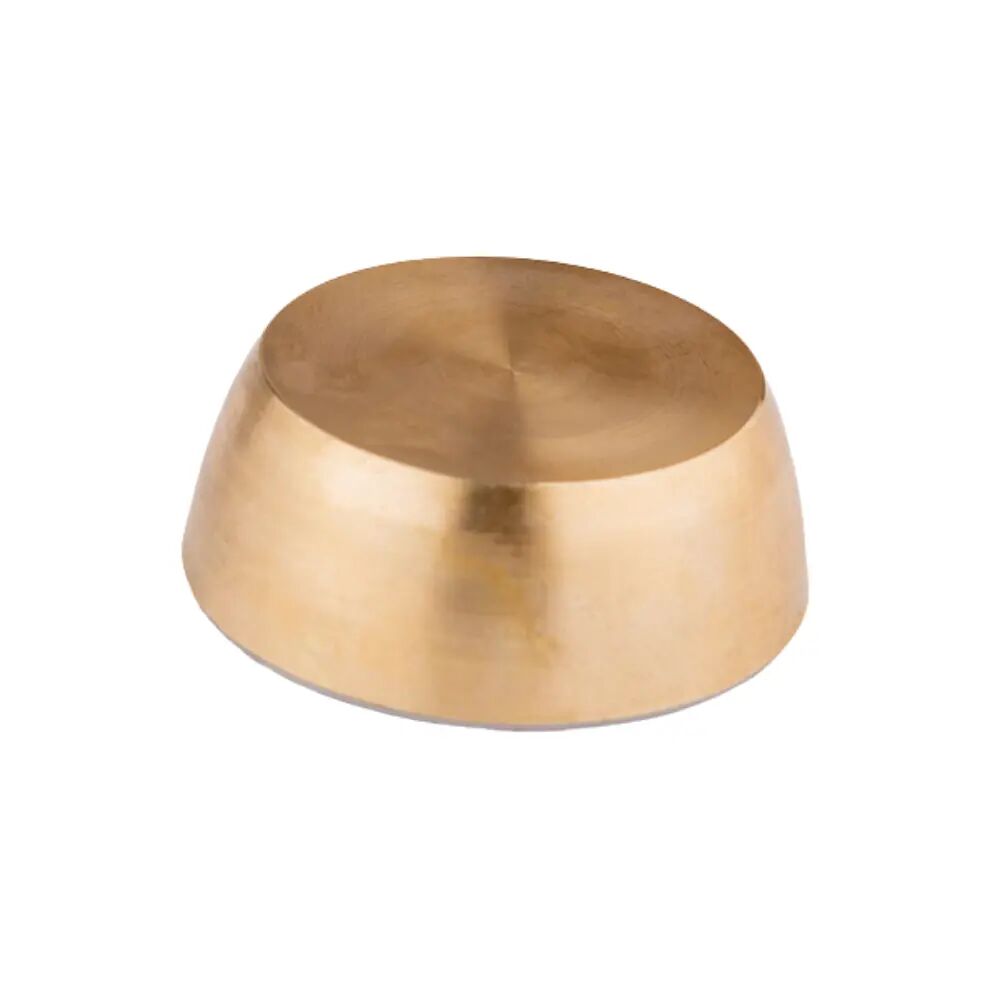
- Flat Vati: A flat top with no lines and no dots makes it the gentlest of the three. Older people and children often prefer it when the other two make the sole tickle.
- Dotted Vati: Its raised dots give the firmest feel, as discussed earlier.
No Helper Needed with an Electric Machine
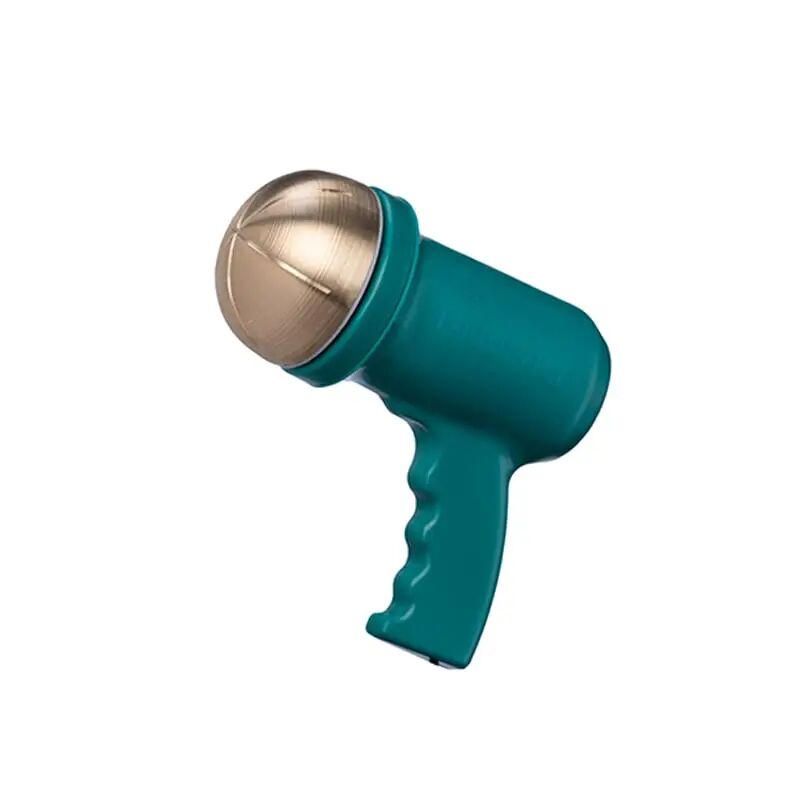
By hand, padabhyanga needs a second person to sit near the feet and give about twenty minutes to it. An electric machine takes over that job. A small motor moves the same bronze vati over the oiled sole, so the massage can be done alone while sitting back in a chair, and it takes about ten minutes in all.
At Vandana Tools, we cast these vatis in our own workshop in Dighi, Pune, and the portable Kansya Vati massagers that carry them are built there too. We have made Kansya massagers since 2014, and we were the first company in India to introduce an electric one.
To learn more about how the massage is done by hand, and how the electric machine compares, please read our article: What Is Kansa Massage? History, Types, Oil, and How to Do It at Home.
Benefits of Kansa Face Massage
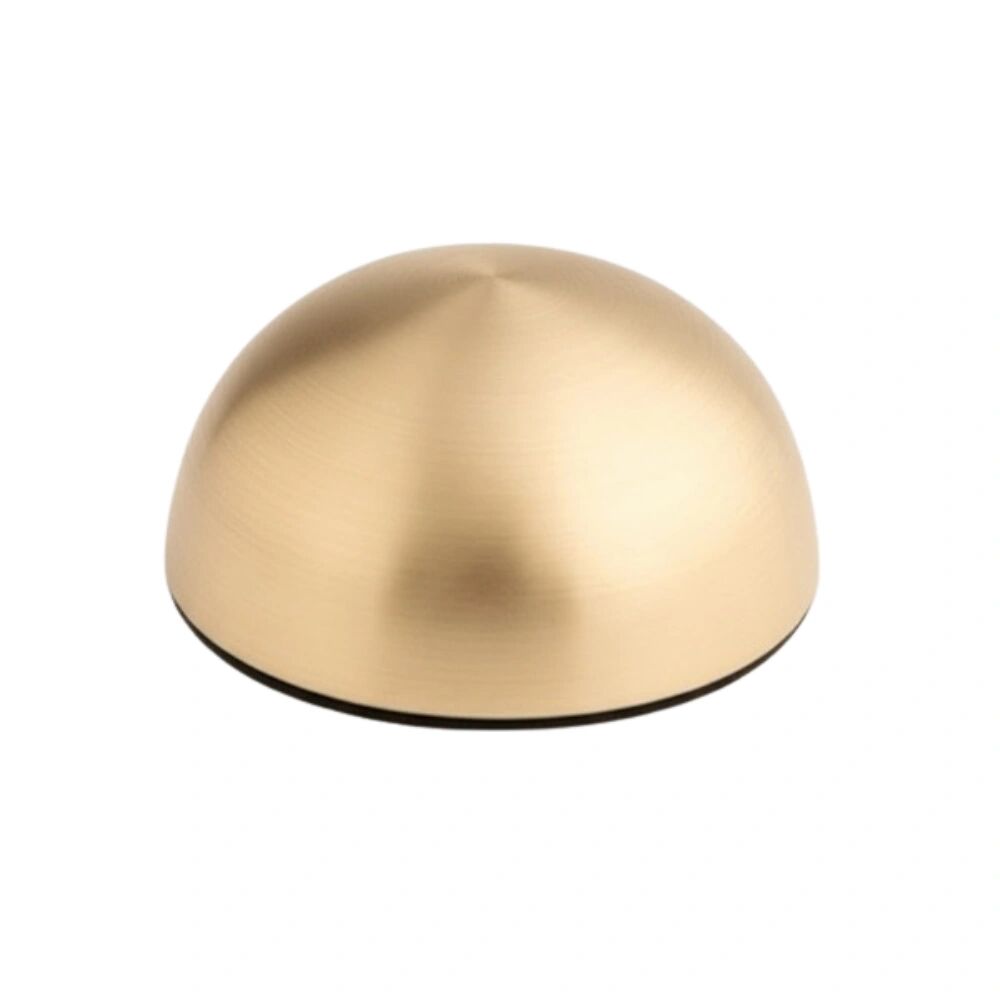
Kansa massage on the face is done with a vati of its own, which is the face vati, a smooth dome of kansya with no lines or dots, and no edge anywhere on it. Only the face vati goes on the face. The round, flat, and dotted vatis are made for the thicker skin of the soles and the body.
Below are the benefits of kansa face massage, all of which come from the vati itself:
- Smooth on the Skin: With no lines or dots on it, the vati slides over the forehead and the cheeks in one even movement.
- Warm Bronze: The kansya warms slowly as it moves over the skin, the same way it does on the sole.
- The Same Kansya: It is cast from the same kansya as the other three vatis, the bronze of copper and tin that Ayurveda has traditionally used for massage.
- One Machine for the Face and the Feet: Every vati fits every portable machine we make, so the face vati goes on the same machine that is used for the feet.
To use it, put a few drops of the oil or the liquid moisturiser cream that you already use on your face, and work slowly outwards from the centre of the face with light pressure. Start at the forehead, then go along the cheeks and the jaw, and keep the vati away from the eyes. The face needs only a few minutes.
Please note that the face vati should be wiped with a dry cloth before and after each use, and if the bronze leaves a faint grey mark on the skin, it is oxidation, and the same cloth wipes it off. If you have a medical condition or broken skin, ask your doctor before starting any massage routine.
Benefits of Kansa Body Massage
In Ayurveda, the daily oil massage called abhyanga is traditionally given to the whole body, and the feet are only one part of it.1 Kansa body massage brings the same warm bronze and a little oil to the larger parts of the body, such as the legs and the back, or the shoulders and the thighs.
Two of the four vatis are used on the body:
- Round Vati: The same lined vati that goes on the soles is also used on the legs and the back.
- Dotted Vati: It is the vati used on the shoulders and the thighs, as well as the back, and its raised dots give it a firmer feel than the round vati.
The benefits on the body are of the same kind as on the feet, since the bronze warms as it moves over the oiled skin, and the lines or the dots decide how firm it feels. At home, it also means that one machine and one set of vatis can be shared between the feet and the body, since the vatis lift off and can be changed as needed.
On the body, oil the skin first, the same way as the sole. Then hold the machine against it and move slowly, without pressing down. Start with light pressure and short sessions. If you have a medical condition or broken skin, ask your doctor first.
Is a Kansa Massager a Medical Device?
No, and we do not describe it as one. Padabhyanga is a traditional Ayurvedic practice, and this machine is a way of doing it at home without a trained person. We do not claim it treats or cures anything. If you are under a doctor's care for anything, ask them before you start.
Simply put, this article describes a tradition and what the bronze vati does on the skin, and it makes no medical claim about any part of the body, right from the feet to the face. Please note that about ten minutes is enough for both feet, and longer is not better. If anything feels uncomfortable, simply stop.
Conclusion
Vandana Tools has been making Kansya massagers in Pune since 2014, and India's first electric Kansya massager was made by us. The vatis are cast from copper and tin in our own workshop in Dighi, and the store where you can see a machine working is at the same address. Every massager we make carries a 2-year warranty, and the vatis are sold on their own, so a machine can stay in use for many years.
We make three kinds of Kansya massagers:
- Portable Kansya Vati massagers: one machine in fifteen sets (KT04, KT06, KT07, KT08, KT09 and KT11 to KT20), from Rs 3,099, with free delivery across India
- Kansya Thali machines: KT03, KT05 and KT10, for daily use at home or all day in a spa or clinic
- Replacement Kansya vatis: round, face, flat and dotted, sold on their own
Talk to Us Before You Buy
If you are not sure which vatis suit the feet, the face, or the body of the people at home, message us on WhatsApp, and a person from our Pune team will help you choose. We are available Monday to Saturday, 9:00 AM to 6:30 PM. You are also welcome to visit our Dighi store for a free demonstration, but please call us before you come.
Message us on WhatsApp or ring +91 82082 83040, and tell us who the massager is for and where it will be used.
References
- Charaka Samhita, Sutra Sthana, Chapter 5 (Matrashiteeya Adhyaya), on the daily routine, including oil massage of the body and a separate passage on foot massage. Charak Samhita New Edition, 2020. https://carakasamhitaonline.com/index.php/Matrashiteeya_Adhyaya
- Ashtanga Hridaya, Sutrasthana 2.9 (Dinacharya Adhyaya), which asks for the oil massage to be given with special care at the head, the ears and the feet. Sanskrit text with an English translation, Satyori. https://satyori.com/sacred-texts/ashtanga-hridayam/sutrasthana/2-9/
- Sushruta Samhita, Sharira Sthana, Chapter 6, on the 107 marma points, the eleven on each leg, and where talahridaya and kshipra sit on the foot. English translation by Kaviraj Kunja Lal Bhishagratna (1911), Wisdom Library. https://www.wisdomlib.org/hinduism/book/sushruta-samhita-volume-3-sharirasthana/d/doc142885.html
Comments
Leave a comment
Every comment is read by our team before it appears. Please do not share your phone number or address here. For an order, message us on WhatsApp (opens WhatsApp)