
What Is Kansa Massage? History, Types, Oil, and How to Do It at Home
Kansa (कांस्य) massage is an Ayurvedic practice that involves massaging the feet with a small bronze bowl. This technique offers numerous health benefits, including skin detoxification, reduced acidity and internal heat, improved blood circulation, enhanced sleep quality, and relief from muscle pain, among others.
-

In this article (11)
- A Brief History of Kansa Massage
- What Kansya Is Made Of, and How It Differs from Copper and Brass
- Types of Kansa Massage
- How Kansa Massage Is Done by Hand
- Which Oil Is Used for Kansa Massage
- The Difference Between Kansya Vati and the Kansya Thali Massager
- Traditional Hand Padabhyanga vs Electric Machine Padabhyanga
- How to Do Kansa Thali Massage at Home in Ten Minutes
- FAQs: Ayurvedic Kansa Massage
- Vandana Tools: Kansya Massagers Made in Pune Since 2014
- References
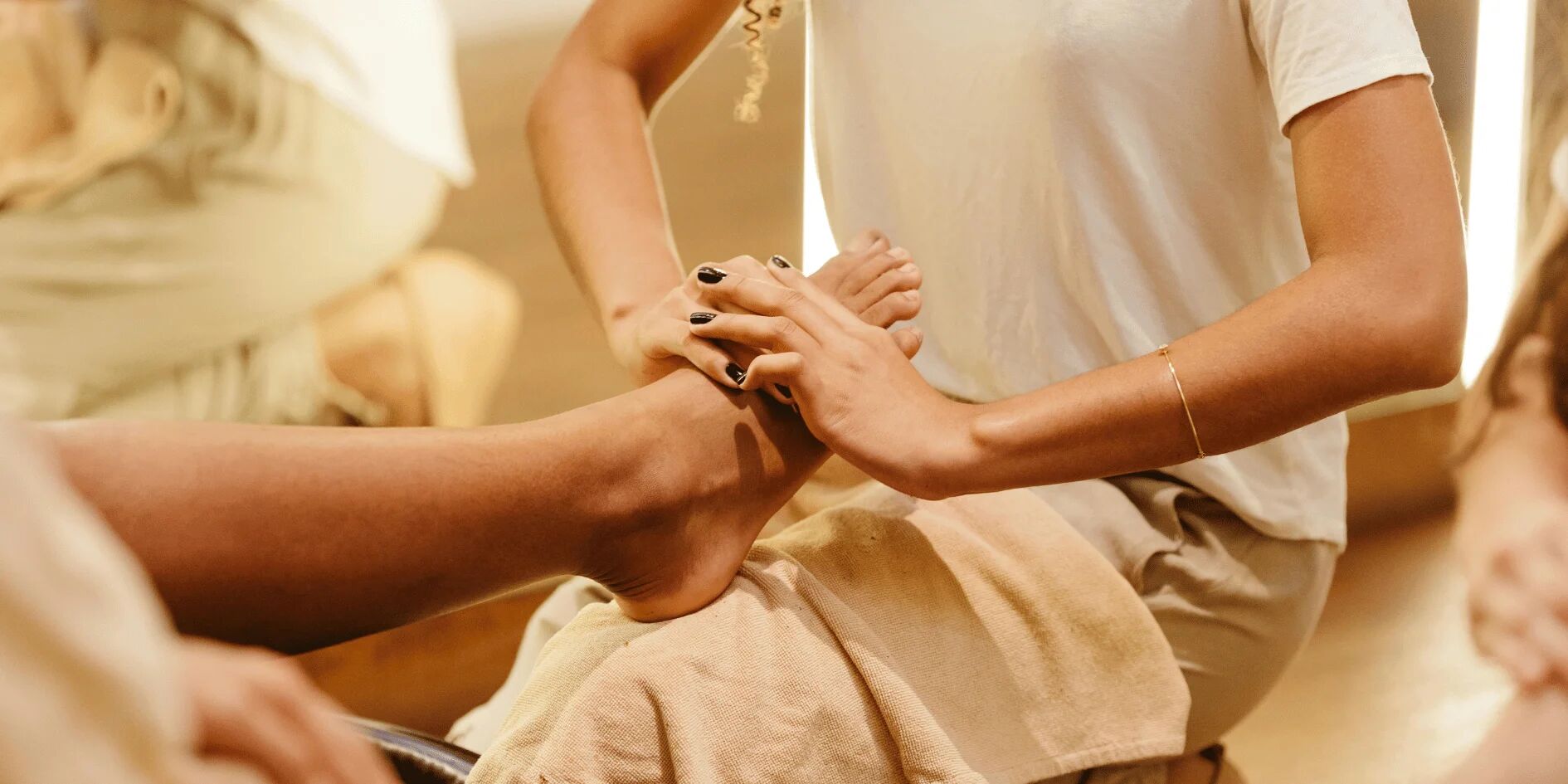
Kansa massage, also known as kansya massage, is the Ayurvedic practice of massaging the feet with a small bronze bowl and a little warm oil. This bowl is called a vati, and it is made of kansya (कांस्य), which is a mix of copper and tin. In Ayurveda, the massage is traditionally done in the evening, in order to help the body settle at the end of the day.
In a large number of Indian homes, the kansa massage is something the older people of the house receive every night. The practice has its own name as well. The Padabhyanga, where “Pada” stands for the foot and “Abhyanga” stands for oil massage. By hand, it takes a trained person twenty minutes, which is why very few families can keep it up.
This article provides a detailed overview of Kansa Massage, including its origins, composition, and various types. We will explain the manual technique, recommended oils, differences between the vati and thali, and how to perform the massage at home using an electric machine in approximately ten minutes.
A Brief History of Kansa Massage
The Kansa (कांस्य) metal has a very long history. In fact, it came before the massage.
The bronze has been cast in India for thousands of years, and the Dancing Girl of Mohenjo-daro, the small bronze figure that most of us first saw in a school history book, is about 4,500 years old.¹ Over the centuries, kansya plates, bowls, glasses, etc. became an integral part of the Indian kitchen as well.
Ancient Ayurvedic Practitioners Always Suggested Daily Foot Massage
- The classical texts, such as the Charaka Samhita and the Ashtanga Hridaya, describe oil massage (abhyanga) as a part of the daily routine.²
- The Ashtanga Hridaya names the feet, along with the head and the ears, as the parts to be given special attention.³ Padabhyanga (पादाभ्यंग), which is nothing but the oil massage of the feet, is described by name in the Charaka Samhita.²
Over time, the two came together at home. In the evening, someone in the house would sit on the floor with a little ghee or oil and work the vati slowly over the soles of an elder, and many homes still do it the same way.
The Modern Way of Doing Ancient Ayurvedic Kansa Massage
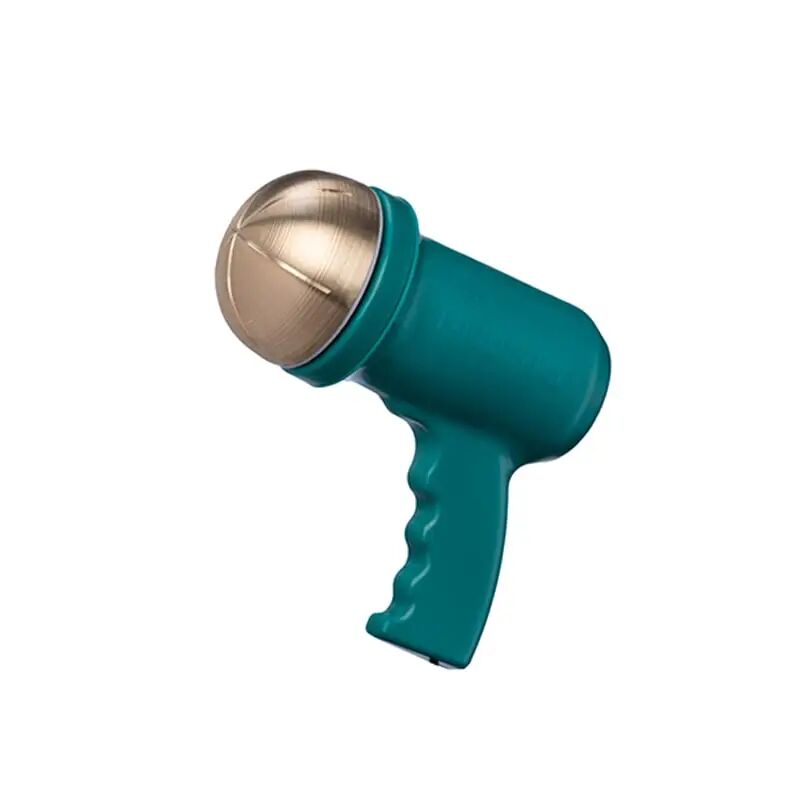
The electric machine is the newest part of this story. Our founder, Mr. Suresh Jadhav, watched his father receive the massage by hand every evening, and saw how much time and effort it required from the person giving it. So he built a machine with a small motor and 100% Pure Kansya Vati using his engineering and manufacturing skills. At Vandana Tools, we have been making these portable Kansya Vati massagers in Dighi, Pune, since 2014, and we were the first company in India to make an electric portable Kansya vatki massager.
What Kansya Is Made Of, and How It Differs from Copper and Brass
Kansya, commonly known as kansa or bell metal, is a type of bronze which is made by melting copper and tin together, and it gets the name bell metal because bells have traditionally been cast from the same alloy.⁴
It is heavy for its size. When it is new, kansya has a warm golden colour.
A kansya vati is made by casting. The molten metal is poured into a mould, and once it has cooled down, each vati is finished by hand.
Difference Between Kansya, Copper, and Brass
Kansya is often confused with copper and brass, because all three look similar in a photograph. Below are the differences:
- Copper: A pure metal, reddish-brown in colour and softer than the other two, used for the tambya or lota that many homes keep for water.
- Brass: An alloy of copper and zinc, also called pital, yellow in colour and used for lamps and puja items.⁵
- Kansya: An alloy of copper and tin, golden in colour, and the metal Ayurveda traditionally uses for massaging the feet.
Simply put, the tin is what separates kansya from brass. Brass looks quite similar when it is new. So, a bowl that looks golden in a photograph online is not always kansya, and before buying, it is always better to check what the seller says the vati is made of and whether it is copper and tin or not.
One more important thing to note is that kansya darkens with use. The oil and the air slowly change the colour of the surface, so a vati that is used every evening turns darker over time, and this is completely normal for kansa. The same thing can leave a light grey tint on the soles, which is only oxidation and comes off with a cloth.
Types of Kansa Massage
In general, kansa massage is named after the part of the body it is done on. Below are the three types, and the vati used for each:
1. Kansa Foot Massage (Padabhyanga)
This is the original type, and it is what most people mean when they say kansa massage. It is done on the soles. Ayurvedic texts describe points on the sole as marma points,⁶ and padabhyanga is traditionally done over them, from the heel to the toes. Three of the four vatis are made for the feet:
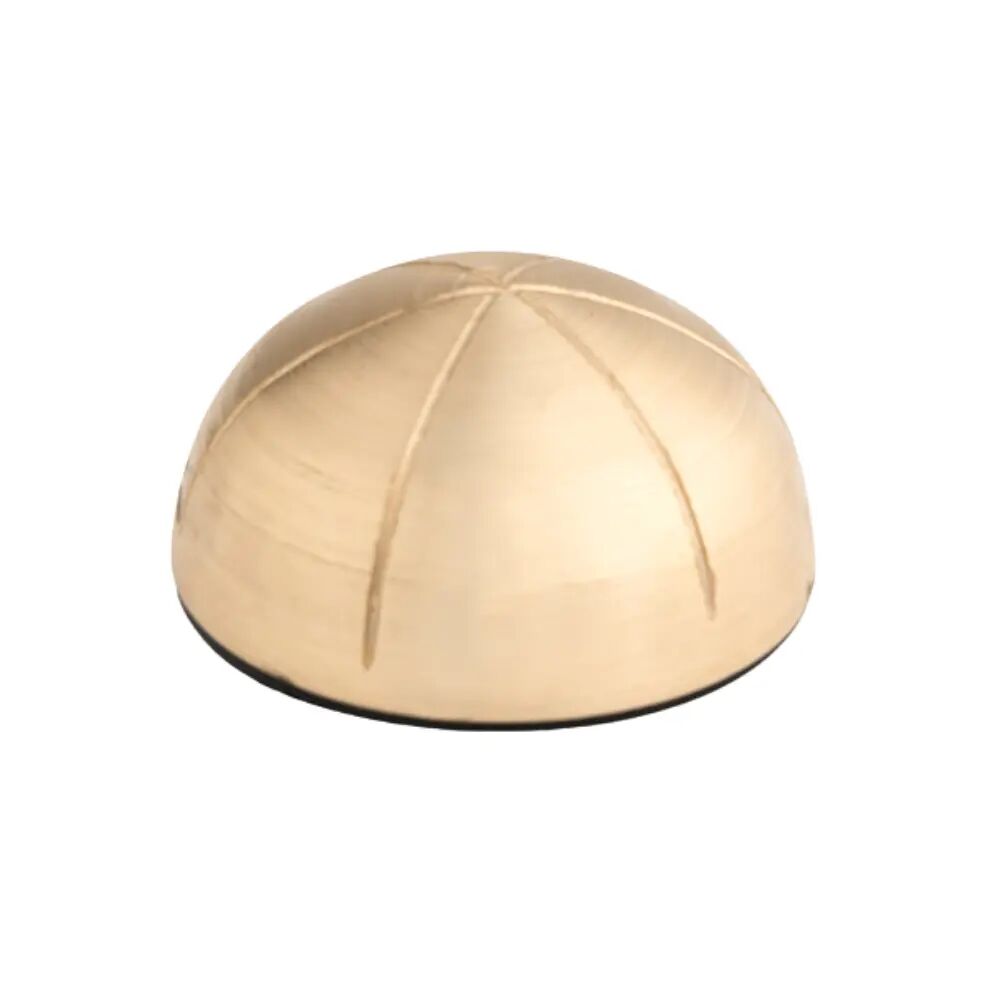
- Round vati: The traditional vati with lines across it, and the one most people begin with. It is also used on the legs and the back.
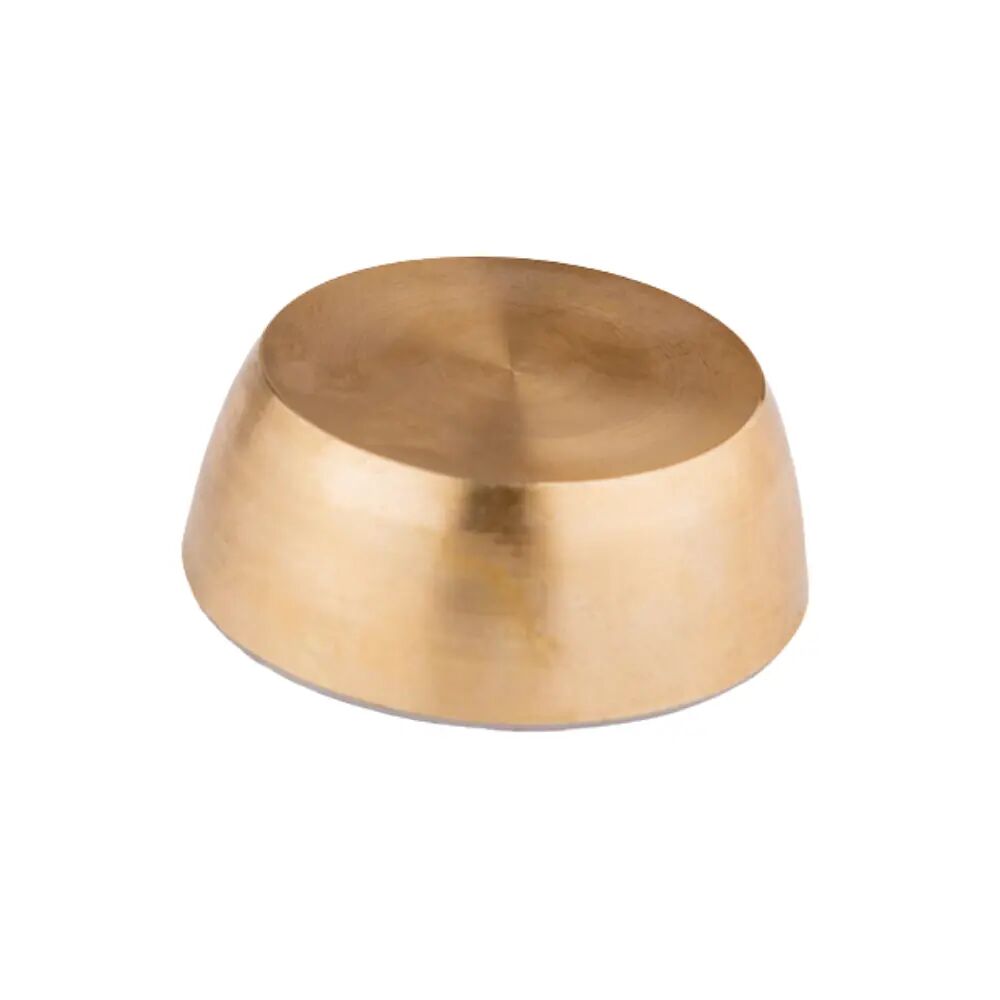
- Flat vati: No lines and no dots, for feet that find the round vati too ticklish. Older people and children often prefer it, and since it has a defined edge, it stays on the feet.
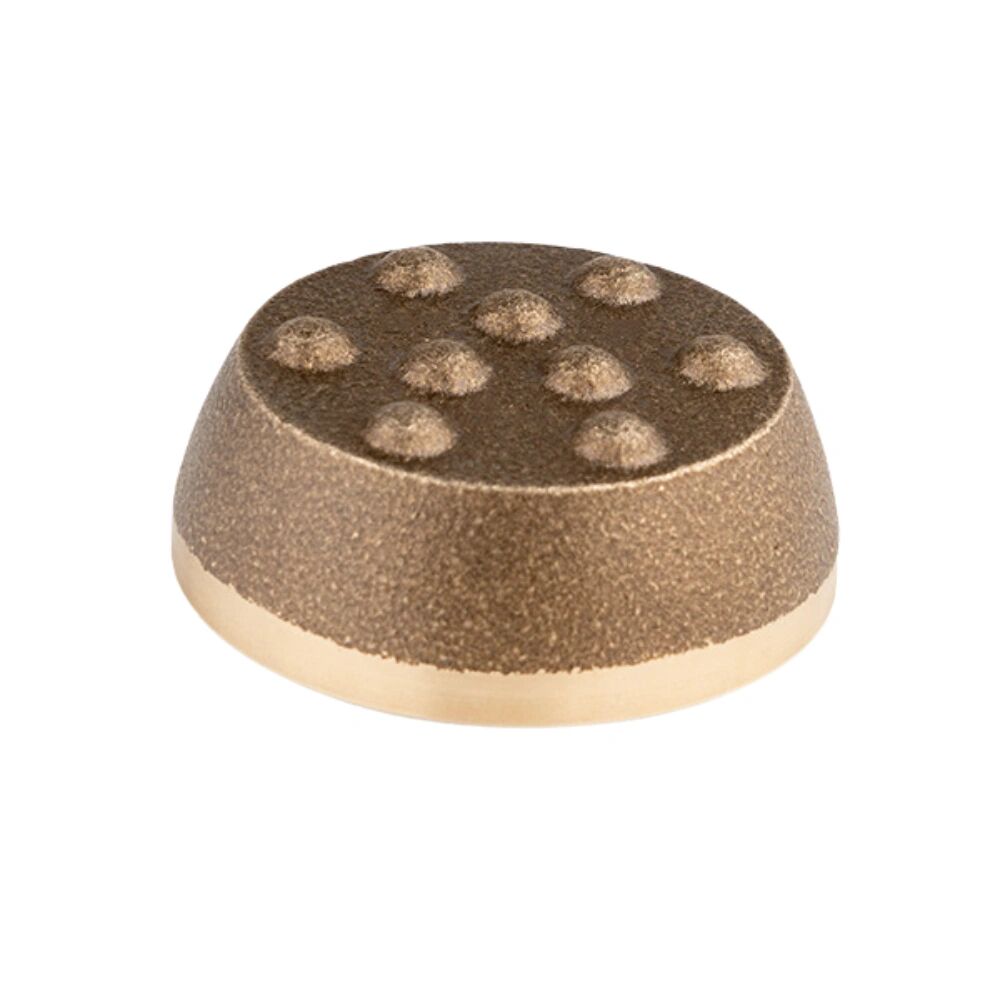
- Dotted vati: Raised dots that gather the weight of the bronze into small points, for a firmer feel and steady pressure on the marma or acupressure points.
2. Kansa Face Massage
Kansa massage is done on the face as well, with a much lighter touch and only a few drops of oil. The massage moves outwards from the centre of the face, first across the forehead and then along the cheeks and the jaw, and it stays away from the eyes. A few minutes is usually enough.
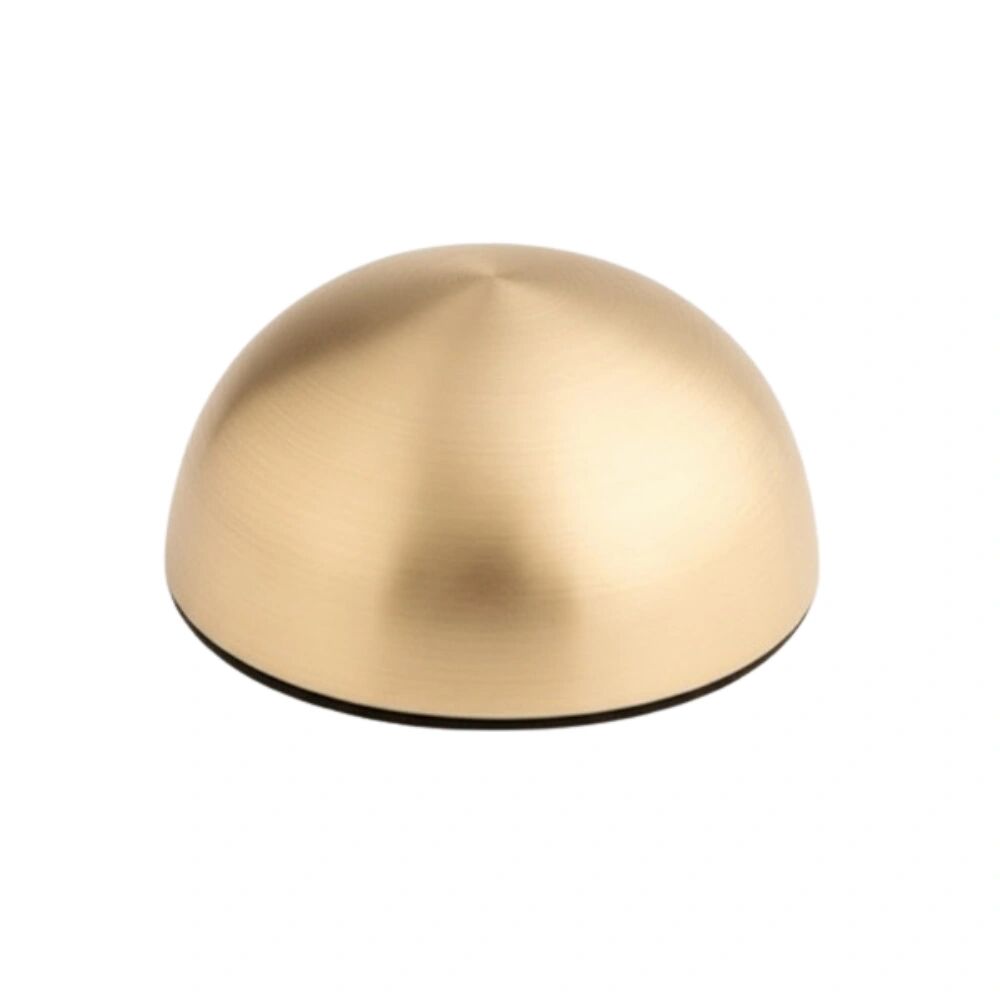
The vati for the face has to be smooth all over, with no lines, no dots, and no edge.
3. Kansa Body Massage
The same massage is done on the body too. Traditionally,
- The round vati is used on the legs and the back
- The dotted or acupressure vati is used on the shoulders and the thighs as well as the back
With an electric machine, the skin is oiled the same way as the feet, and the machine is held against it and moved slowly. Keep the pressure light. Generally, it is better to begin with the feet, and to move to the body once you are used to the feel of the bronze.
How Kansa Massage Is Done by Hand
Before the electric machine, kansa massage was always done by hand, and in many homes it still is. It needs two people. One lies down or sits back with the legs stretched out, and the other sits near the feet with the vati and the oil. Below is how it is usually done:
- Warm a little oil or ghee: A spoonful is enough for both feet, and it only needs to be warm to the touch, never hot.
- Spread it over the soles: Rub it in with the palm so that the vati glides on the skin.
- Hold the vati by its rim: The rounded bottom goes against the sole, and the hand guides it without pressing hard.
- Work in slow circles and long strokes: Cover the heel, the arch, the ball of the foot, and the toes, spending a little time on each part.
- Wipe the feet and the vati: A soft, dry cloth is enough for both.
Traditionally, this is done in the evening, after a bath, or before bed. Done properly, it takes about twenty minutes for both feet. In most cases, the person giving it sits on the floor for the whole time, and this is the reason why the hand method is dependent on one family member being free every evening.
Which Oil Is Used for Kansa Massage
The oil plays a vital role in kansa massage. It lets the bronze move smoothly over the skin. On a dry sole, the vati drags, and the massage feels rough, so a little oil is always used, whether the massage is done by hand or with a machine. Below are the oils that people commonly use:
- Coconut oil: A common choice in homes that already cook with it, and it lets the vati glide just as well.
- Sesame oil: Also called til oil, this is the oil that the Charaka Samhita names as the ideal oil for oiling the body, and the one traditionally used for padabhyanga.⁷
- Desi ghee: The other traditional choice, used with the kansya vati in many homes.
- The oil you already use: If your family already has a massage oil, the same oil works for kansa massage too.
Please note that a spoonful of oil is enough for both feet, and it only needs to be warm to the touch. No special oil is needed. For the face, a few drops of the oil or liquid moisturiser cream you normally use on your face are enough.
The Difference Between Kansya Vati and the Kansya Thali Massager
Both of them are made of kansya, and both are used with a little oil on the soles, so it is easy to mix up the two. The difference is in the size and in the way the feet meet the metal.
The vati is a small bowl that fits in one hand. In padabhyanga, its rounded bottom is worked over the sole, either by hand or on a small electric machine, and it is meant for one person at a time, which makes it the usual choice for a home.
On the other hand, the thali is a large plate of kansya. In our full-size Kansya Thali machines, the thali is 16 inches across, and the feet rest on it while the machine moves in clockwise and anticlockwise directions.
Kansya thali foot massager machines are heavier, and they are built for longer daily use.
Below is a quick comparison of the two:
| Kansya Vati | Kansya Thali | |
|---|---|---|
| What it is | A small bowl that fits in one hand | A large plate, 16 inches across |
| Best suited for | Home use, one person at a time | Spas, clinics, and homes that want a full-size machine |
Traditional Hand Padabhyanga vs Electric Machine Padabhyanga
Traditional hand padabhyanga is the way the massage has been done for generations. A trained person can change the pressure and the strokes as they go, and can spend longer on one part of the foot when asked.
In reality, the second part is the hard part. Someone has to sit on the floor for twenty minutes every evening, and in most cases that is the part which families find difficult to keep up.
On the other hand, an electric machine padabhyanga uses a small motor to move a kansya vati. You sit in a chair, rub a little oil on the sole, rest your foot on the vati, and switch it on. That is all you have to do. Both feet take about ten minutes. The kansya and the oil stay the same, and the vati still travels slowly across the sole the way it does by hand, so the biggest change is that nobody has to sit on the floor to give the massage.
Both methods use a kansya material. As such, if someone at home is trained and has twenty minutes every evening, hand padabhyanga is the traditional way, and there is nothing to change. The machine makes more sense when the person wants the massage every evening and nobody is free to give it.
How to Do Kansa Thali Massage at Home in Ten Minutes
Doing a kansa massage at home with an electric Kansya vati machine must not feel like a complex task. All you need is a spoonful of oil, a chair where you can sit back, and about ten minutes of your evening. Below are the steps:
- Place the machine in front of a chair: Keep it on the floor, and sit back properly so that you are comfortable for ten minutes.
- Fit the vati and plug it in: The round vati suits most feet, the flat vati is for feet that tickle, and the dotted vati gives a firmer feel.
- Rub the oil into the sole: Sesame oil is the traditional one, but the oil you already keep at home will do.
- Switch it on and rest your foot on the vati: The weight of your leg is enough, so there is no need to push down.
- Move slowly from the heel to the toes: Shift your foot a little every few seconds as per your comfort, for about five minutes on each foot.
- Wipe the vati when you finish: Use a soft, dry cloth, and store the vati dry.
Please note that about ten minutes in total is the usual advice, and there is no need to go longer.
FAQs: Ayurvedic Kansa Massage
Q. Is Kansa Massage the Same as Padabhyanga?
Yes, in most homes the two names mean the same thing. Padabhyanga is the Ayurvedic name for the oil massage of the feet, and kansa massage is what people call it when a kansya vati is used.
Kansa massage is sometimes done on the face and the body as well, while padabhyanga is done on the feet only.
Q. Is a Kansa Massager a Medical Device?
No, and we do not describe it as one. Padabhyanga is a traditional Ayurvedic practice, and this machine is a way of doing it at home without a trained person. We do not claim it treats or cures anything. If you are under a doctor's care for anything, ask them before you start.
Q. How Long Does Kansa Massage Take?
By hand, it takes about twenty minutes for both feet. With an electric machine, about five minutes on each foot is enough, which means around ten minutes in total.
Q. Why Do the Feet Turn Grey After Kansa Massage?
The grey colour comes from the bronze. When kansya moves against oiled skin, the surface of the metal oxidises a little, and some of that grey is left on the soles. It is only oxidation, which comes off when you wipe your feet with a cloth, and the same thing is the reason why the vati itself turns darker with regular use.
Q. Can the Foot Vati Be Used on the Face?
No. Only the face vati goes on the face. It is smooth all over, with no lines, no dots, and no edge, while the round, flat, and dotted vatis are made for the soles, where the skin is thicker.
Q. Can I Do Kansa Massage on My Own?
Yes, with an electric Kansya vati machine. You only have to sit in a chair with your foot on the vati, and the machine does the movement for you. By hand, it is difficult because most people can not reach their own soles comfortably and keep a vati moving for twenty minutes.
Vandana Tools: Kansya Massagers Made in Pune Since 2014
Vandana Tools has made electric Kansya massagers in Pune since 2014. We were the first company in India to make one. Today, we still cast every vati and build every machine in our own workshop in Dighi, where our store is as well, and every massager carries a 2-year warranty, with our quality system certified to ISO 9001:2015 by TÜV Austria.
We make three kinds of Kansya massagers:
- Portable Kansya Vati massagers: one machine in fifteen sets (KT4, KT6, KT7, KT08, KT09 and KT11 to KT20), from Rs 2,699, with free delivery across India
- Kansya Thali machines: KT3, KT5 and KT10, for daily use at home or all day in a spa or clinic
- Replacement Kansya vatis: round, face, flat and dotted, sold on their own
Talk to Us Before You Buy
If you are not sure which set suits your home, message us on WhatsApp and tell us who will use the machine.
References
- National Museum, New Delhi, "Dancing Girl" (bronze, from Mohenjo-daro, dated circa 2500 BCE), catalogue record on the National Virtual Library of India. https://wzcc.nvli.in/museums/dancing-girl
- Charaka Samhita, Sutra Sthana, Chapter 5 (Matrashiteeya Adhyaya), on the daily regimen, including oil massage and foot massage. Charak Samhita New Edition, 2020. https://carakasamhitaonline.com/index.php/Matrashiteeya_Adhyaya
- Ashtanga Hridaya, Sutrasthana 2.9 (Dinacharya Adhyaya), on giving oil massage special care at the head, the ears and the feet. Sanskrit text with translation: https://satyori.com/sacred-texts/ashtanga-hridayam/sutrasthana/2-9/
- "Bronze" and "Bell metal", Encyclopaedia Britannica. Bronze is an alloy of copper and tin, and bell metal is a bronze with a high tin content. https://www.britannica.com/technology/bell-metal
- "Brass", Encyclopaedia Britannica. Brass is an alloy of copper and zinc. https://www.britannica.com/technology/brass-alloy
- Wisdom Library, "Marma", on the marma points described in the Sushruta Samhita, Sharira Sthana, Chapter 6: https://www.wisdomlib.org/definition/marma. And "Talahridaya", the marma at the middle of the sole: https://de.wisdomlib.org/definition/talahridaya
- Charak Samhita New Edition, herb database, "Tila" (Sesamum indicum), which lists Charaka Samhita, Sutra Sthana 13/12, for sesame oil as the ideal oil for oiling the body (snehana). https://www.carakasamhitaonline.com/index.php?title=Tila
Comments
Leave a comment
Every comment is read by our team before it appears. Please do not share your phone number or address here. For an order, message us on WhatsApp (opens WhatsApp)